
 1,400,000 meals
 33,695 supporters
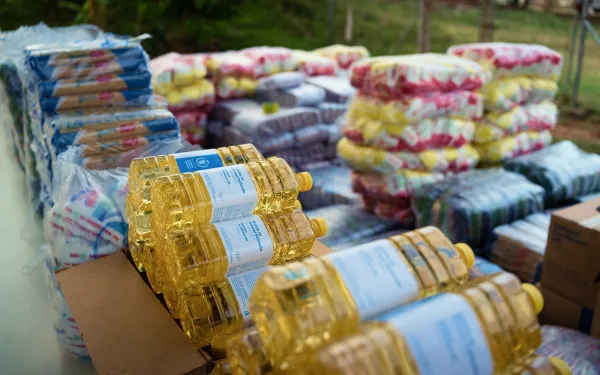
What’s inside a typical WFP food basket

Rice or flour
A staple item in many countries and vital source of daily energy.

Vegetable oil
Rich in essential fats and vitamins, supporting a healthy immune system.

Lentils or beans
Plant-based protein and fibre, helping maintain a healthy heart and gut.

Salt
Supports a healthy pregnancy and helps child development.
The food basket is based on local food preferences and diets wherever possible so the items could vary.
In the first week after the disaster, food assistance covering the needs of 8,000 people for 15 days was distributed. WFP has procured an additional 180 metric tons of food and is prepared to scale-up assistance as needs grow.
Overview
Shared meals will provide emergency food assistance and help families in Nepal recover after devastating flash floods and landslides.
Nepalese communities are facing immediate challenges after flash flooding and landslides in late August 2026. Humanitarian needs are immense, with approximately 10,000 households (approximately 43,000 people) in need of emergency support. This disaster comes at a time when malnutrition, child wasting and anaemia were already major concerns, leaving vulnerable families at even greater risk of hunger. The World Food Programme (WFP) is on the ground and scaling up support to the Government-led emergency response. Within 48 hours of the disaster, WFP had dispatched emergency food assistance to 5,000 people in affected areas. Emergency food baskets include fortified rice, lentils, vegetable oil, and iodised salt to help families meet their immediate food and nutrition needs. Alongside food assistance, WFP is helping to reach communities that have been cut off. The Kathmandu Humanitarian Staging Area is operating around the clock to move essential supplies, including shelter materials, blankets, water, fuel and power equipment. As communities move from emergency response to recovery in the months ahead, ongoing support will be critical to families rebuilding their lives.
Location
 Nepal


