79,819 supporters
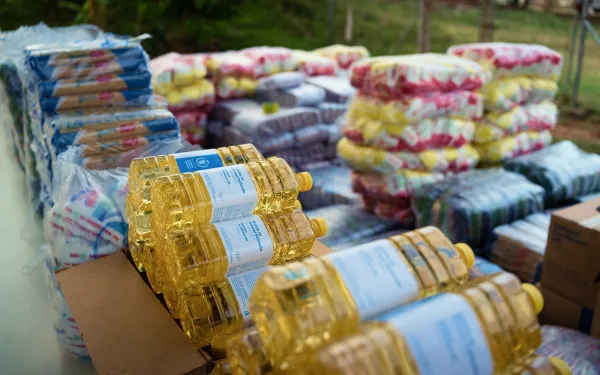
What’s inside a typical WFP food basket

Rice or flour
A staple item in many countries and vital source of daily energy.

Vegetable oil
Rich in essential fats and vitamins, supporting a healthy immune system.

Lentils or beans
Plant-based protein and fibre, helping maintain a healthy heart and gut.

Salt
Supports a healthy pregnancy and helps child development.
The food basket is based on local food preferences and diets wherever possible so the items could vary.
Food insecurity remains widespread in Syria. WFP food assistance helps preserve stability and supports vulnerable families living through this prolonged crisis.
Overview
Shared meals will provide emergency food assistance, nutrition support, school meals and resilience activities in Syria.
After years of conflict, economic hardship and repeated shocks, the situation in Syria remains extremely fragile. Today, almost 8 million people are facing food insecurity. Rising prices, displacement and limited access to jobs and essential services are making it increasingly difficult for families to put food on the table. The World Food Programme (WFP) continues to provide life-saving food, cash and nutrition assistance to families across the country. Emergency assistance helps people meet their immediate food needs, while nutrition programmes help support the health of pregnant and breastfeeding women and young children. WFP is also responding to the needs of displaced families and returnees, many of whom are returning to communities where homes, livelihoods and essential services have been severely affected by years of conflict. Beyond emergency assistance, WFP is helping communities build more resilient food systems by restoring bakeries, mills and other essential food infrastructure, supporting livelihoods and strengthening social protection systems. Together, these efforts help families and farming communities move from crisis towards greater self-reliance and long-term recovery.
Location
 Syria