108,050 supporters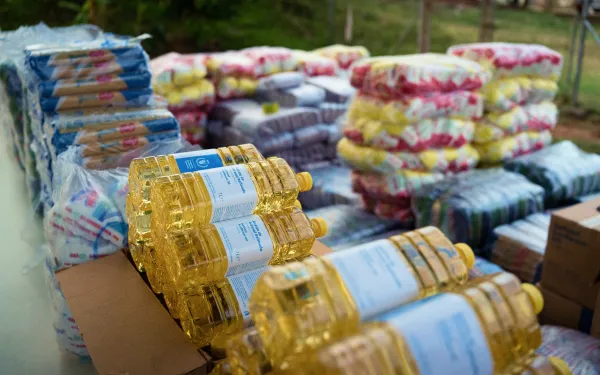
What’s inside a typical WFP food basket

Rice or flour
A staple item in many countries and vital source of daily energy.

Vegetable oil
Rich in essential fats and vitamins, supporting a healthy immune system.

Lentils or beans
Plant-based protein and fibre, helping maintain a healthy heart and gut.

Salt
Supports a healthy pregnancy and helps child development.
The food basket is based on local food preferences and diets wherever possible so the items could vary.
As conflict continues, five million people remain hungry, mostly along the frontlines. Millions of families are forced to sacrifice meals so their children can eat, or they are going into debt to buy food.
Overview
Shared meals will provide food, cash, school meals and help restore livelihoods for vulnerable Ukrainians.
Since the fighting began three years ago, the World Food Programme Ukraine has been on the frontlines focusing on communities near areas of active conflict. Despite huge challenges, WFP Ukraine has provided the equivalent of 3.3 billion meals to families affected since 2022 — and counting. Programmes aim to source food locally, with more than 80% of the food WFP provides to Ukrainians being bought in Ukraine. Food boxes contain wheat flour, pasta, canned meat, canned beans, sunflower oil and oats. To help Ukriane, WFP has expanded its activities to include school feeding, pension top-ups and projects to help Ukrainians return to farming. WFP's school feeding programme supports daily meals for 174,000 schoolchildren across the country. Donate to Ukraine by sharing a meal with someone in need. A small action can have great impact.
Location
 Ukraine